

Mix and Match Metals: How to Select Lighting Fixture and Hardware Finishes for Your Home
April 9, 2024
Lighting Expert, @lightsdotcom
Hardware and lighting largely contribute to the aesthetic of a home. In fact, if you’re looking for a quick and cheap way to refresh a room or update the style of your house, simply changing your light fixtures and metal accents can do the trick!
But how do you pick a metal finish? Do you choose brass or bronze, satin nickel or polished nickel? Is it okay to mix and match? Or is it best to stick with one metal family?
The choices are endless, but we created a guide that will help.
Brass
Aged, antique brass is the latest trend for adding a vintage, edgy vibe to your home. Used as an eye-catching accent, brass adds a luxurious touch to any room. It can be integrated into warm and white rooms, and it can even add an extra pop in rooms with darker tones. Use brass when you want the light fixture to be noticed and eyes to be drawn to the metal finishes.

Ferris Medium Chandelier 27", Modern Brass
Chrome
The reflective qualities of chrome make it another eye-catching option. Chrome tends to add a lightness and brightness to rooms, and considering how well it pairs with silver and glass decor, it is an extremely practical option. Chrome is usually affiliated with modern furnishings and decorations, however it is just as complementary to traditional and vintage looks.

Ellie LED Vanity Light 24", Chrome
Nickel
A great neutral choice is nickel. Nickel has a subtle gray color which pairs well with almost any color scheme or room theme. Nickel comes in two finish options: polished and satin. Polished nickel is comparable to chrome because it possesses similar reflective, mirror-like qualities. Polished nickel can perfectly compliment a room with a dark color scheme.
Meanwhile, satin nickel is known for its longevity. Satin nickel can easily be transitioned into different designs and room updates, while polished nickel is more difficult to carryover. For example, polished nickel looks great in a room with a dark color scheme, but if in a few years you want to update that room to a bright color scheme, the polished nickel might not work anymore while the satin nickel would have carried over.
Both finishes have their pro’s and con’s, but given nickel’s neutrality you can’t go wrong.

Elira Lantern Pendant 16", Brushed Nickel

Sutton 1-Light Wall Sconce, Polished Nickel
Black
Black finishes are a true design staple—timeless, versatile, and easy to work into almost any style. From crisp Matte Black to softer, more dimensional Aged Iron, black metal lighting adds contrast and definition without overwhelming a space. These finishes pair especially well with white, warm neutrals, natural wood, brass accents, and bold color, making them an easy choice for both modern and traditional interiors. Matte Black offers a clean, polished look, while Aged Iron brings a slightly warmer, more lived-in character with subtle variation and depth. Because black finishes continue to be widely used across lighting, hardware, and decor, coordinating the rest of the room is refreshingly simple.
Bronze
Bronze finishes bring warmth, depth, and a slightly more traditional feel to a space, while still working beautifully in modern interiors. Depending on the finish, bronze can range from warm brown tones with subtle metallic highlights to much deeper, nearly black shades. Urban Bronze is one of the darkest variations, offering the richness of bronze with a look that can easily read as black from a distance. Lighter bronze finishes tend to feel softer and more classic, while darker options create stronger contrast and a more contemporary edge. Because bronze pairs so naturally with wood, stone, warm neutrals, and aged metals, it’s an especially versatile choice for layered, inviting interiors.
How to Mix and Match
Don’t want to pick just one? Great! Gone are the days of choosing one metal finish for the whole home. Today, it is extremely common to mix and match metal finishes in order to achieve different aesthetics in your home.
But how do you mix the right way? Which metals compliment each other, and which ones are like those two relatives who can’t stand to be in the same room?
Here are some general rules to follow:
- Never choose more than three! Two or three metals is the magic number, but anything more than three can be distracting and confusing.
- Ever heard of the phrase ‘opposites attract’? Well that applies here! You can safely mix shiny with matte, and it also works to mix warm with cool. Mixing metals can add visual interest and fun dimensions to your home.
- If you’re not into contrast, then similar hues are also an acceptable approach. Pairing warm tones with a warm-colored room makes for a satisfying style, and same with pairing cool tones.
- Finally, be sure to have 2-3 finishes that are used throughout the whole home. For example, have a touch of silver in every room just to make things consistent. Or if you’re feeling brave, add a dash of brass to each room! Don’t forget to include your outdoor lighting and hardware into this theme. Your curbside appeal should be cohesive with the interior style of your home for the best possible experience.

Q&A: Submit your question
All questions are answered within 24 hours.
Other Stories You'll Love
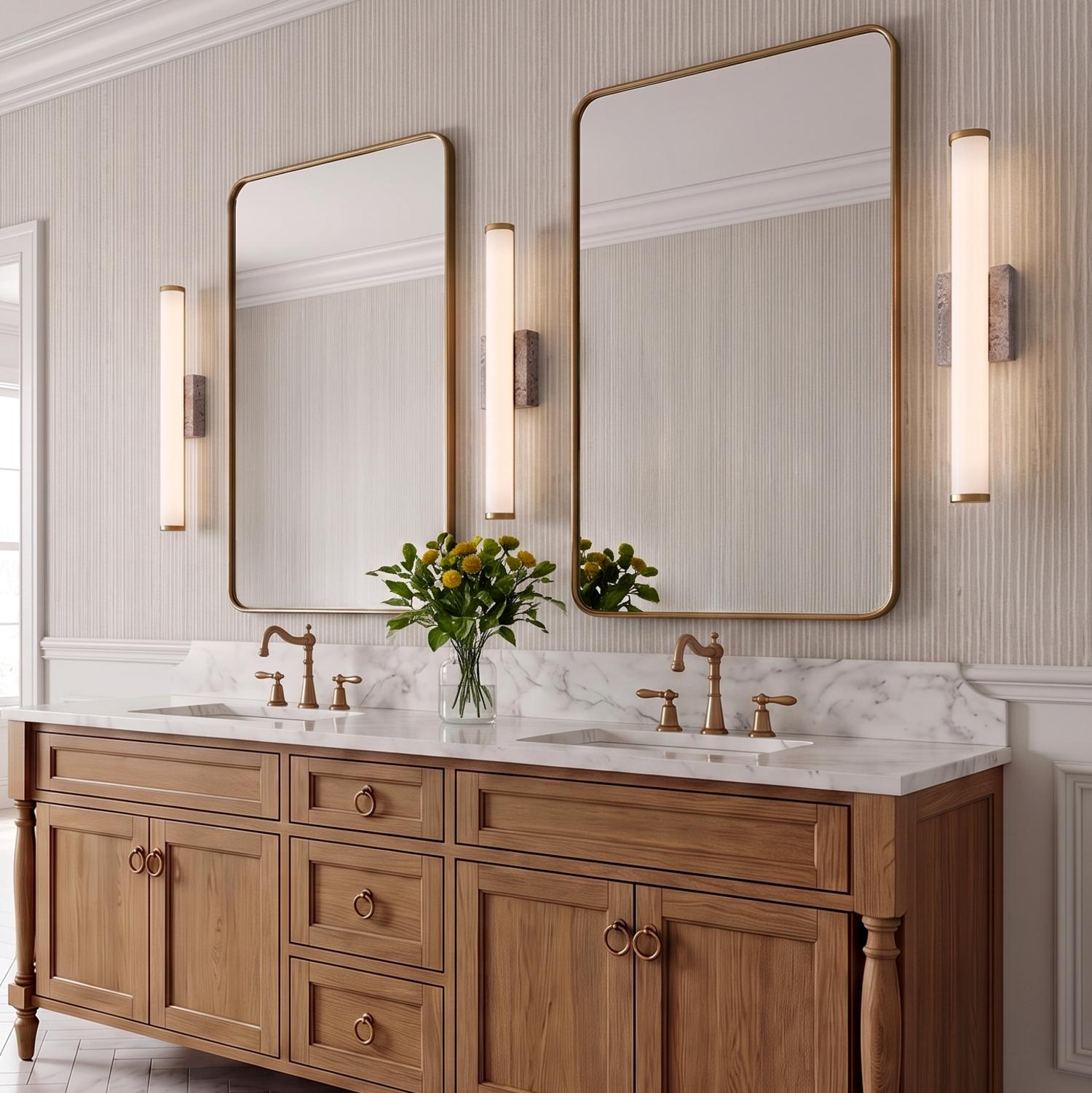
How to Light Your Bathroom
Whether you’re remodeling your bathroom or just looking for a refreshing change, light fixtures could bring the accent and ambiance you’re looking for. Our collection of vanity and wall lights features timeless designs and modern features to give a flawless finish to your dream bathroom.
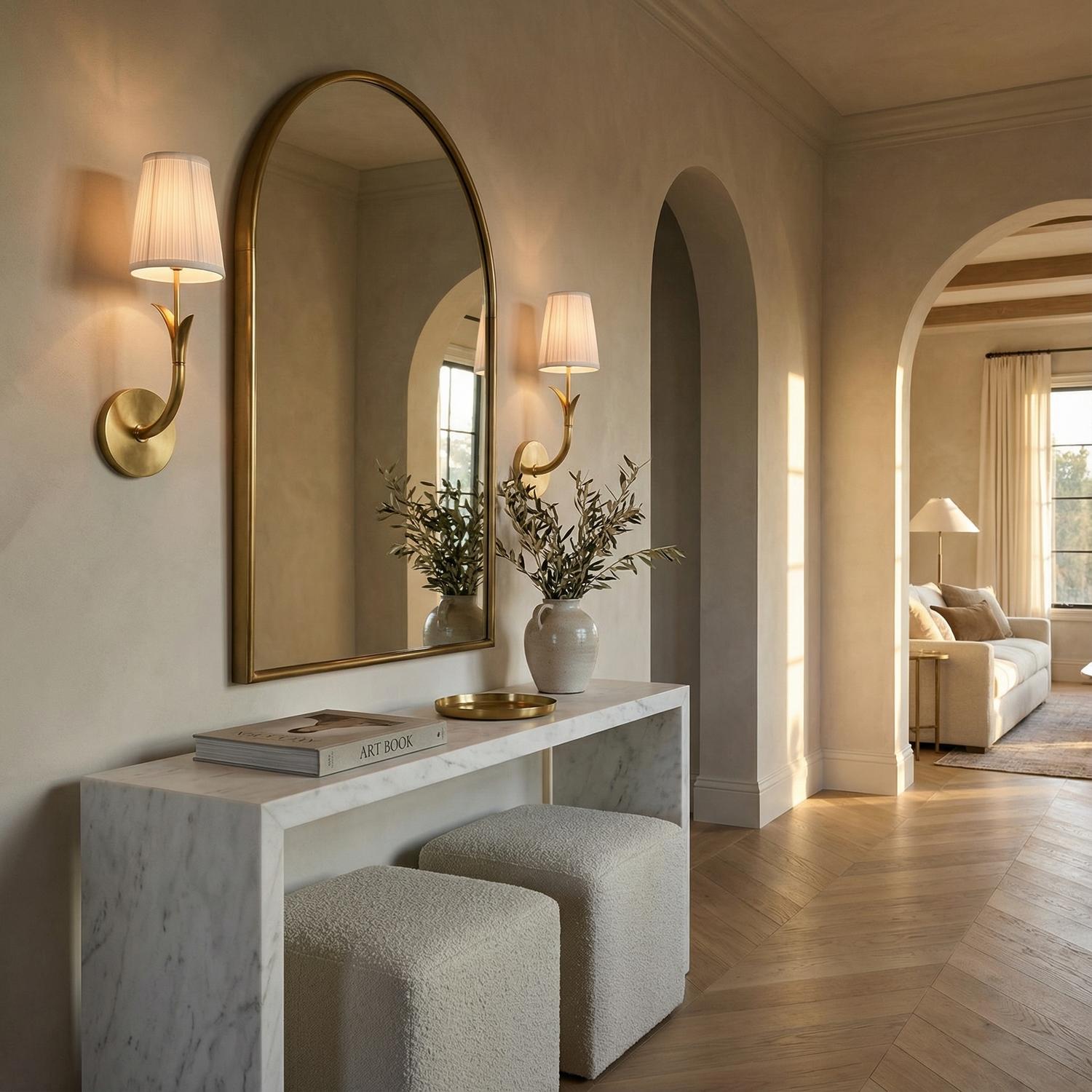
How to Choose And Install Wall Sconces
How to Choose and Install Wall Sconces
Wall sconces are one of the easiest ways to add another layer of light without taking up valuable floor, table, or ceiling space. They can provide flattering bathroom lighting, brighten a hallway, replace bedside lamps, or simply add warmth and character to a room. The key is choosing the right style for the job and installing it at a height that works for both the fixture and the people using the space.
HOW HIGH SHOULD WALL SCONCES BE?
As a general starting point, install wall sconces with the center of the fixture approximately 60–66 inches from the floor. From there, adjust the height based on ceiling height, fixture size, furniture, and the purpose of the light.
-
In rooms with taller ceilings, sconces can often be mounted slightly higher to stay proportional to the wall.
-
Consider where the actual bulb or light source falls—not just the backplate. Ideally, exposed bulbs should not sit directly at eye level.
-
Before installation, have someone hold the fixture against the wall or create a paper template so you can check the height and scale from across the room.
TIP: There isn't one perfect mounting height for every sconce. Use 60–66" as your starting point, then let the fixture's size, shade position, and light direction help determine the final placement.
BATHROOM WALL SCONCES
Before choosing bathroom sconces or wall lights, think about how the space is used. If the vanity is for daily grooming tasks like shaving or makeup application, prioritize bright, even light on both sides of the face. In a powder room or guest bath, the sconces can be more decorative and focused on creating a specific atmosphere or style.
Sconces Beside a Bathroom Mirror
-
When installing a pair of sconces beside a vanity mirror, keep them evenly spaced from the mirror and aligned with the mirror’s center point for a balanced, symmetrical look.
-
Position the center of the fixtures around 60–66 inches from the floor, or roughly at eye level for the people who use the bathroom most.
-
With double vanities, place sconces at the outer edges with an additional sconce between the mirrors, depending on the available wall space and layout.
-
For daily grooming, choose sconces with opal or frosted glass to create soft, even, diffused light.
-
For decorative lighting, such as in a moody powder room, look for sconces that wash the wall with light or provide soft, indirect illumination.
TIP: Look for damp-rated lighting when choosing sconces for a bathroom. Damp-rated fixtures are designed for humid interior environments, although they should not be installed where they will come into direct contact with water.
HALLWAY & STAIRWAY WALL SCONCES
Hallways and stairways are natural places for wall sconces because they add light without taking up valuable floor space. A repeated row of sconces can also create rhythm along a long wall and turn an otherwise overlooked passageway into part of the home's overall design.
Hallway Sconce Placement
-
Mount the center of hallway sconces approximately 60–66 inches above the floor. With taller ceilings, you can move them slightly higher to maintain proportion.
-
For a long hallway, spacing sconces approximately 6–8 feet apart is a useful starting point for even illumination.
-
Keep fixture depth in mind. In narrow hallways and staircases, look for sconces with a relatively slim projection so they don't intrude into the walkway.
Stairway Sconces
On a staircase, sconces can illuminate areas that overhead lighting may not reach evenly. Keep the fixtures at a visually consistent height relative to each stair tread as you move up the staircase rather than measuring every fixture from the floor at the bottom.
ADA-COMPLIANT WALL SCONCES
ADA-compliant wall sconces have a slim profile designed to minimize how far the fixture projects into a walking path. In areas where ADA protrusion rules apply, wall-mounted fixtures positioned between 27 and 80 inches above the floor can extend no more than 4 inches from the wall into the circulation path.
-
Look for sconces specifically identified as ADA-compliant, especially for hallways, corridors, entryways, and other high-traffic areas.
-
Their low-profile design also makes ADA sconces a smart choice for narrow hallways, stairways, small bathrooms, and compact spaces, even when ADA compliance isn’t required.
-
A fixture’s extension measurement tells you how far it projects from the wall, so check this specification when shopping for a slim-profile sconce.
TIP: ADA sconces aren’t just for commercial spaces. Their streamlined profile can be a practical design choice anywhere you want decorative wall lighting without having the fixture extend too far into the room.
BEDSIDE WALL SCONCES
Bedside sconces free up nightstand space while bringing the light exactly where you need it for reading or winding down at night. Fixed sconces create soft ambient light, while swing-arm and adjustable wall lights allow you to direct light toward a book or tablet.
How High Should Bedside Sconces Be?
With a standard-height bed, about 60–65 inches from the floor to the center of the fixture is a useful starting point. More importantly, the light source should sit around or slightly above shoulder level when you’re sitting up in bed.
-
Consider the height of the mattress and headboard before finalizing placement.
-
Keep the fixture within comfortable reach if it has an integrated switch or adjustable arm.
-
Swing-arm and adjustable sconces can be mounted based on where the light falls when extended, rather than the fixture’s resting position.
TIP: Sit in bed before deciding on the final height. A measurement that looks perfect while standing can feel completely different once you're sitting against the headboard.
TIP: Don’t forget about function. Some wall sconces have a switch directly on the fixture or cord, while others are controlled only by a wall switch. For bedside use, think about which option will be easiest to reach and most convenient from bed.
Plug-In vs. Hardwired Bedside Sconces
Hardwired sconces create the cleanest look because the wiring is concealed inside the wall. Plug-in sconces are a great alternative when you don't already have a junction box or want a simpler installation without opening the wall.
Plug-in styles are especially useful for renters, bedrooms where furniture may move, or anyone who wants the look of built-in bedside lighting with more flexibility.
WALL SCONCES IN THE LIVING ROOM & DINING ROOM
Wall sconces are a great way to layer light with a chandelier, ceiling fixture, or floor lamps. Sconces can brighten darker corners, add symmetry, or highlight architectural and decorative features without competing with the room’s primary light source.
-
Try a matching pair on either side of a fireplace or built-in shelving.
-
Add two sconces above a console or buffet in the dining room for additional light in serving areas.
-
Use decorative sconces to break up a large blank wall and add ambient light at eye level.
-
Picture lights are a great option for highlighting artwork, adding a focused layer of illumination while making the piece feel more intentional and gallery-like.
TIP: Sconces don't always have to match your chandelier. Repeating one element—such as the finish, glass color, or overall shape—is often enough to make different fixtures feel connected.
WALL SCONCES IN THE KITCHEN
Wall sconces can bring another layer of decorative lighting to a kitchen, particularly in areas where there is open wall space or where the primary light source doesn't reach. Wall lights also add style and function to walk-in pantries or butler's kitchens.
-
Use sconces to flank a range hood and create a balanced focal point around the cooking area.
-
Frame a window with a pair of sconces for symmetry and additional light at night.
-
Install sconces near open shelving to add both useful illumination and decorative interest.
TIP: Keep the fixture's projection from the wall and location in mind so that cabinet doors, pull-out shelves, and cooking areas have plenty of clearance.
Installing A Wall Sconce
Before installation, take a few minutes to check the fixture’s size, placement, and electrical requirements. A little planning can help prevent awkward proportions, glare, or clearance issues once the sconce is on the wall.
-
Confirm whether the fixture is hardwired or plug-in and whether the electrical connection is located where you want the sconce to sit.
-
Check the fixture’s height, width, and extension so you know how much wall space it will occupy and how far it projects into the room.
-
Consider the light source and direction. Make sure exposed bulbs or bright LEDs won’t sit directly in your line of sight.
-
When installing a pair, measure carefully so both sconces are mounted at the same height and evenly spaced from the mirror, fireplace, artwork, or other feature they frame.
-
In bathrooms or other humid areas, check that the fixture has the appropriate damp- or wet-location rating for its placement.
-
For hardwired fixtures, always follow the manufacturer’s instructions, turn off power at the circuit breaker before electrical work begins, and use a qualified electrician when a new junction box or wiring is required.
TIP: Use painter’s tape or a paper template to mark the fixture’s actual size on the wall before installation. It’s one of the easiest ways to check height, scale, and spacing before committing.
CONCLUSION
Choosing the right wall sconces starts with thinking about what you want the light to do. Bathroom sconces can provide flattering vanity lighting, hallway sconces improve visibility while adding architectural interest, and bedside sconces create comfortable task lighting without taking up nightstand space. By considering mounting height, fixture size, light direction, and placement before installation, wall sconces can become one of the most functional—and decorative—layers of lighting throughout your home.
FREQUENTLY ASKED QUESTIONS
How high should wall sconces be from the floor?
A good starting point is to install the center of the wall sconce about 60–66 inches from the floor. Adjust the height based on ceiling height, furniture, fixture size, and where the actual light source falls.
How high should bedside wall sconces be?
Bedside sconces are often installed around 60–65 inches from the floor, but mattress and headboard height matter too. The light should sit comfortably above shoulder level when you’re sitting up in bed and be easy to reach if the fixture has an on/off switch.
How far apart should wall sconces be in a hallway?
For a long hallway, spacing wall sconces about 6–8 feet apart is a useful starting point. Larger fixtures may need more space, while smaller sconces can be placed closer together depending on the length and width of the hallway.
Can you install wall sconces without hardwiring?
Yes. Plug-in wall sconces mount to the wall and connect to a standard electrical outlet, making them a convenient option when you don’t have an existing junction box or want to avoid opening the wall. Even better, rechargeable wall sconces like the Riven Rechargeable Wall Sconce have no wiring at all, and a rechargeable LED light bulb included.
What does ADA-compliant mean for a wall sconce?
An ADA-compliant wall sconce has a low-profile design that limits how far it projects into a walking path. In areas where ADA rules apply, wall-mounted fixtures positioned between 27 and 80 inches above the floor can extend no more than 4 inches from the wall.
Where should wall sconces be placed in a bathroom?
For balanced vanity lighting, place a matching sconce on each side of the bathroom mirror, ideally around eye level. Side lighting helps illuminate the face more evenly and can reduce the shadows created by overhead lighting.


